|
Thursday 1. 10.
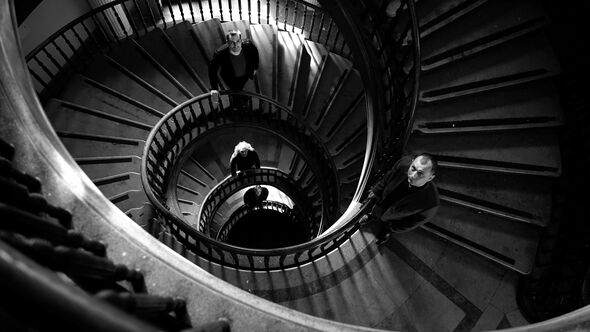
info On the Border Between Klezmer and the Avant-GardeThe group made its debut in 2000, then still performing under the name Cracow Klezmer Band, with the album De Profundis released on Tzadik, the label run by avant-garde New York saxophonist John Zorn. While the New York-based group Klezmatics is credited with pioneering the rediscovery of Eastern European Jewish music, their example inspired dozens of European ensembles of comparable originality. Among the finest is Poland’s Bester Quartet, originally known as Cracow Klezmer Band. Unlike Klezmatics, the group performs exclusively instrumental compositions intended for listening rather than dancing. Although the musicians possess a virtuosity rooted in classical music, spirituality prevails over exhibitionism in their live performances. Experts often compare bandleader Jaroslaw Bester to the French jazz accordionist Richard Galliano. The ensemble debuted in 2000 with De Profundis on Tzadik, the label led by avant-garde New York saxophonist John Zorn. Their repertoire draws on themes from the tradition of old Eastern European klezmer bands, combining improvisation with a technically flawless command of acoustic instruments – violin, accordion, clarinet and percussion. Kraków, the band's home city, did not become the epicentre of Eastern European klezmer by chance. The Jewish district of Kazimierz was founded in 1335 by the Polish king Casimir the Great and became, for several centuries, a major Jewish capital of Europe. This era was tragically brought to an end by the Second World War. Depopulated by the Holocaust, Kazimierz remained in ruins throughout the forty-five years of communist rule, making it an authentic setting for the filming of Steven Spielberg’s Schindler’s List. The film premiered simultaneously in Los Angeles and Kraków, and the publicity became a catalyst for the district’s revival. Today, Kazimierz is a beautifully restored part of Kraków and the home of the Jewish Culture Festival, under whose auspices Bester Quartet was formed. Bester Quartet has existed since 1997, when its members were students at the Kraków Academy of Music. Needing to earn extra money, they began playing klezmer music in a local restaurant. Traditional Jewish repertoire inspired bandleader Jaroslaw Bester to compose original works, and when the group sent recordings to New York avant-gardist John Zorn in 2000, he proposed releasing them on his Tzadik label. American music critic Howard Reich wrote about the band during its United States tour for The Chicago Tribune: “For all their harmonic and rhythmic sophistication, the musicians above all strive to hold the attention of the average listener. Their elegant interplay, virtuosic solos, and the intelligence and drama of their performances make audiences hang on every note. Accordionist Jaroslaw Bester coaxed sounds from his instrument that you never imagined possible. Violinist Jaroslaw Tyrala played with an otherworldly intonation and refinement worthy of Mendelssohn or Brahms. Oleg Dyyak acted as a musical chameleon, equally accomplished on accordion, clarinet and percussion, greatly expanding the ensemble’s expressive range. And bassist Wojciech Front ensured that shifts in rhythm and tempo happened almost imperceptibly.” The group’s primary inspiration was not contemporary ensembles such as Klezmatics, but archival recordings made by the first generation of Jewish immigrants in the United States. “We listened to klezmer through pre-war recordings by clarinetists such as Dave Tarras and Naftule Brandwein, both of whom came from Ukraine. At first, we played traditional Jewish music, then gradually began transforming it. The turning point came when Jaroslaw Bester composed his first piece, De Profundis, for the album of the same name. That was when we began to rethink our views, both on Jewish music and on music in general. Our sound moved from traditional repertoire toward original compositions, and from Jewish styles toward contemporary and avant-garde music.” Presented by Rachot Production. |
|