|
Monday 9. 11.
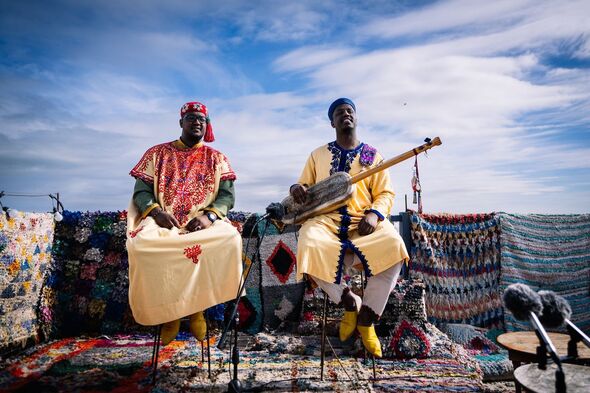
info Morocco’s Parallel to American BluesSince the 7th century, Morocco was part of trade routes that included enslaved people from Sub-Saharan Africa, a history that left a profound mark on the country’s musical culture. The descendants of these communities, known as Gnawa, created a fascinating musical tradition closely connected to all-night trance rituals called lila. One of its most celebrated figures was Mahmoud Guinia, a sought-after collaborator of American improvisers such as Pharoah Sanders and Hamid Drake. His son, Houssam Guinia, now comes to Prague. He is remarkable not only for his musicianship, but also because he received the title of maâlem—reserved for master musicians—before the age of thirty. Although Gnawa emerged within Black communities in a way that invites comparison to American blues, the two traditions differ greatly in both sound and social function. At the heart of Gnawa music are cyclical chants accompanied by the hypnotic bass lute guimbri and sharply rhythmic metal castanets. While blues bears witness to oppression and hope in the Western world, Gnawa serves as a direct connection to the spiritual world of African mysticism and the realm of the djinn. When Robert Plant and Jimmy Page of Led Zeppelin travelled to Marrakesh in 1994, they recorded with Gnawa musicians. The tradition has also long fascinated American jazz artists. Saxophonist Patrick Brennan recalls: “When I first heard Gnawa musicians, I was captivated. I could hear blue notes in the singing, just like in the blues. The melodic structures reminded me of the music of John Coltrane.” Houssam Guinia recorded his cult album Dead of Night live in a single take in Casablanca, Morocco. The result is a deeply intimate and spiritual statement, performed without accompaniment from other instruments. Houssam sings songs passed down to him by his father. Over the past two decades, Gnawa music has reached audiences around the world. Its most important international event is the Essaouira Gnaoua and World Music Festival, founded in 1998. Yet the authentic home of this tradition remains the private ritual. When a Moroccan family moves into a new house, they may invite a Gnawa ensemble to cleanse it of harmful spirits. The lila ceremony continues until dawn. Before midnight, everyone attends, including women and children; afterwards couscous is served and the gathering becomes more intimate. From the very beginning, participants witness an intoxication of music and movement—a contagious state of ecstasy that emerges when people become attuned to the same wavelength. The lead musician, the maâlem, negotiates with individual spirits, each identified by specific colours and rhythms, to ensure they bring no harm to the household. Musicians dance among candle flames and walk across hot coals. Since 2019, the Gnawa tradition has been inscribed on UNESCO’s Representative List of the Intangible Cultural Heritage of Humanity. Presented by Rachot Production. |
|